
New Tankless Installation
We assess demand, select an appropriate gas or electric unit, plan its location, and identify any venting, gas-line, electrical, water-line, or condensate work needed for a code-compliant installation.
Serving Frisco, Texas & surrounding areas
Open 24/7
Get the right unit, fuel supply, venting, and installation plan for dependable hot water without an oversized system or avoidable change orders.
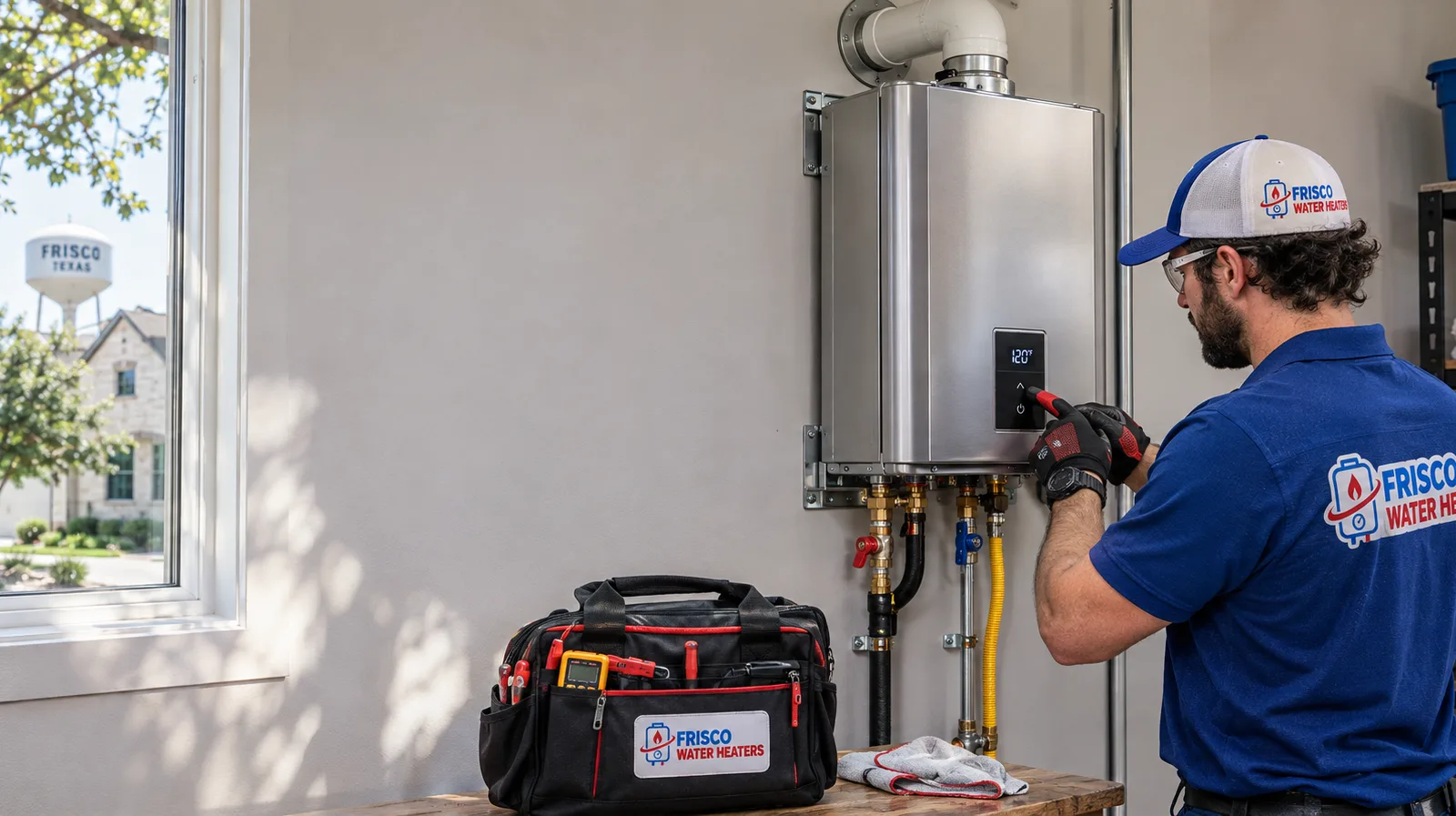
Choosing a tankless water heater installer involves more than selecting a brand and hanging a unit on the wall. The installer must calculate peak hot-water demand, account for incoming water temperature, confirm the available gas or electrical capacity, and plan approved venting and condensate disposal where required. A poor match can cause temperature swings, restricted flow, ignition faults, or expensive utility upgrades discovered after work begins.
Frisco Water Heaters starts with the existing equipment, household usage, installation location, and available utilities. Before installation starts, Frisco's trusted water heater team explains the proposed unit size, required supporting work, and commissioning steps. Our office at 7250 ALL STARS AVE, Unit 4 places us in Frisco, close to the homes we serve.
Frisco includes newer planned communities as well as established homes with different mechanical layouts. Grayhawk homes may have garage installations where wall space and vent routing drive the plan. In Newman Village, installation decisions can depend on larger household demand and multiple fixtures operating at once. Hollyhock and Phillips Creek Ranch contain newer construction, but the existing gas line, electrical circuit, vent route, and manufacturer clearances still need to be verified at the property rather than assumed.
We assess demand, select an appropriate gas or electric unit, plan its location, and identify any venting, gas-line, electrical, water-line, or condensate work needed for a code-compliant installation.
A tank to tankless conversion removes the storage tank and reworks the installation around a wall-mounted appliance. The scope may include a larger gas line, a dedicated electrical receptacle, new venting, isolation valves, and a condensate drain.
Replacement is not always a direct swap. We check whether the existing vent system, connections, service valves, gas supply, and unit capacity remain suitable before installing the new equipment.
Diagnostic work can address ignition failures, error codes, temperature fluctuations, restricted flow, leaks, scale buildup, and combustion or venting faults. The error history and operating conditions help separate a component failure from an installation problem.
Tankless water heater maintenance includes inspecting filters, connections, venting, condensate components, and combustion-related parts as applicable. Flushing circulates a manufacturer-approved descaling solution through the heat exchanger when mineral buildup requires it.
If you are unsure whether to repair, replace, or convert, we compare the unit's condition, installation quality, service history, household demand, and likely supporting work.
Sizing begins with simultaneous demand, measured in gallons per minute. A shower, faucet, dishwasher, and washing machine can overlap, so fixture flow rates matter more than the number of bedrooms alone. The required temperature rise is the difference between incoming water temperature and the desired outlet temperature. Every manufacturer publishes flow performance at specific temperature rises, and that data should guide unit selection.
For gas-fired equipment, the installer verifies available BTU capacity, pipe size, run length, regulator conditions, combustion air, and the approved venting method. High-efficiency condensing units also produce acidic condensate that needs an approved drain arrangement and may require neutralization. Electric tankless units can draw substantial current, so the service panel, breaker spaces, wiring, and utility capacity must be checked before recommending one.
The installation should also include accessible shutoffs and service valves where appropriate. After connection, the technician checks for leaks, purges air, verifies combustion or electrical operation, sets the outlet temperature, tests hot-water flow, and confirms that the appliance operates without stored faults. Manufacturer instructions and applicable local permit and inspection requirements govern the final setup.
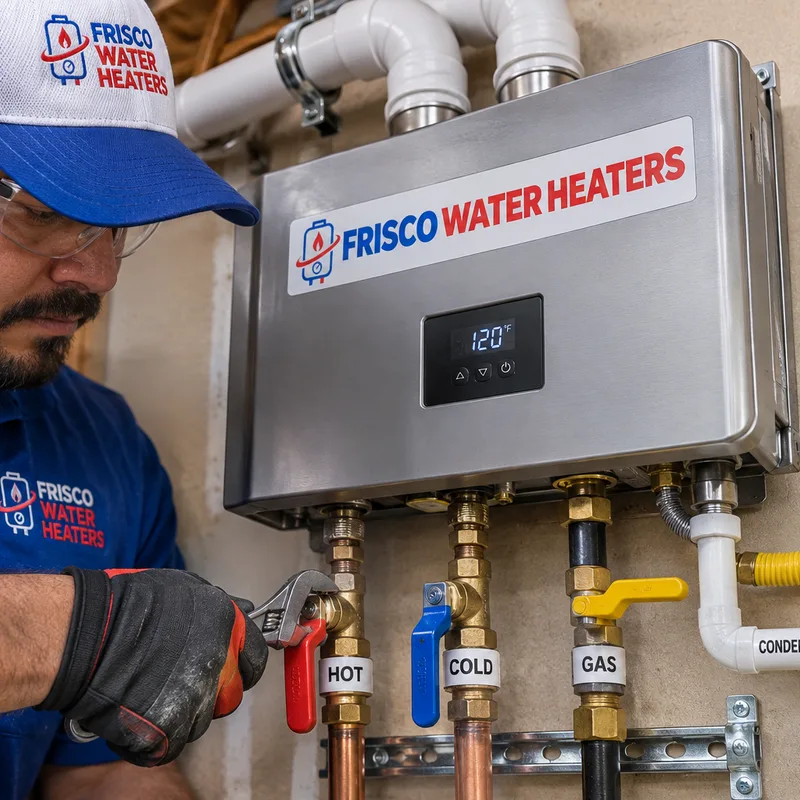
Tankless water heater installation in Frisco typically costs about $3,000 to $7,500 for a gas system, while complex conversions or major utility upgrades may reach $8,000 to $12,000 or more. Straightforward replacements generally cost less than first-time conversions.
Final pricing depends on unit capacity, fuel type, gas-line sizing, vent length, electrical work, condensate drainage, permits, access, and removal of old equipment. A written scope should separate the appliance from required supporting work. The exact cost is confirmed after an on-site assessment.
Step 1 of 5
We review household usage, fixture flow, the current heater, installation space, gas or electrical capacity, water connections, and possible vent and drain routes.
Step 2 of 5
You receive a clear recommendation covering unit type and capacity, placement, supporting upgrades, removal work, permit considerations, and expected installation conditions.
Step 3 of 5
The old equipment is removed when applicable. The new unit, service valves, approved venting, fuel or electrical connections, water piping, and condensate components are installed according to the agreed scope.
Step 4 of 5
We check connections, start the appliance, test flow and temperature, verify proper operation, and review controls, shutoffs, and basic owner care.
Step 5 of 5
We document maintenance considerations based on the model, installation, usage, and water conditions rather than relying on a single schedule for every household.
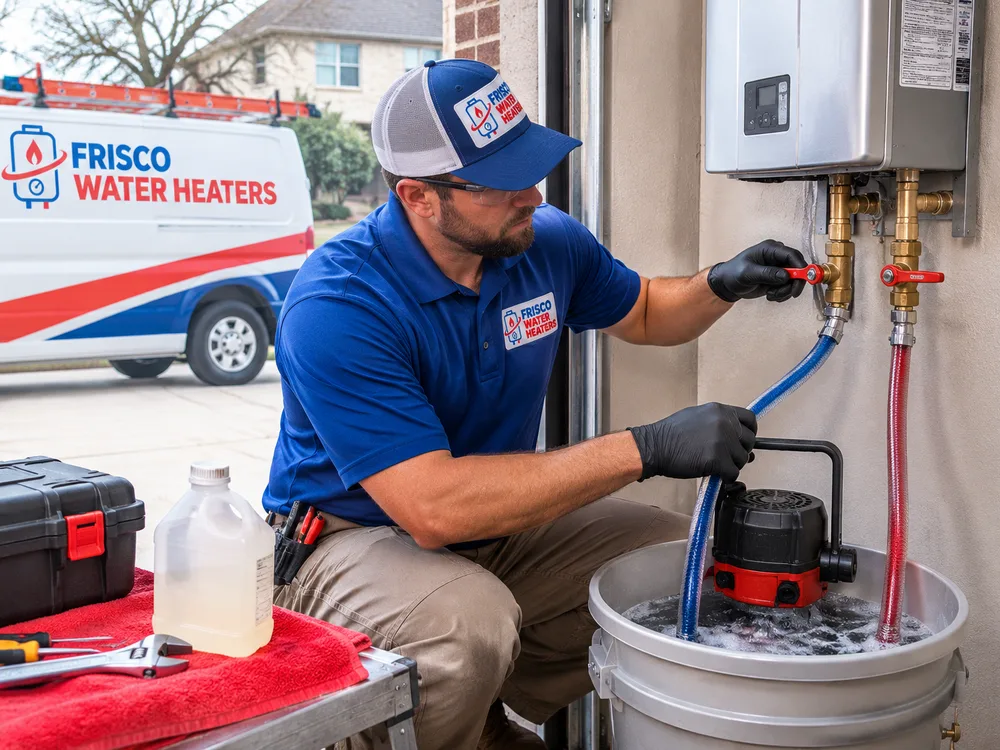
Maintenance protects flow through the heat exchanger and gives a technician a chance to find small issues before they cause shutdowns. The appropriate interval depends on water quality, usage, operating temperature, appliance design, and manufacturer instructions. Error codes, reduced hot-water output, unusual noise, or unstable temperatures are reasons to arrange service rather than simply reset the unit repeatedly.
Tankless water heater flushing is a specific maintenance procedure. After the appliance is isolated, a compatible descaling solution is circulated through the heat exchanger using the service ports. The system is then rinsed and returned to operation. Flushing does not correct every fault. A clogged inlet filter, failed sensor, blocked condensate trap, improper gas pressure, vent obstruction, or damaged component requires diagnosis.
North Texas water conditions can vary by supply and property, so maintenance recommendations should be based on observed scale and the appliance manufacturer's guidance. Never mix cleaning chemicals or circulate an unapproved product through the unit. Gas and combustion components should be handled by a qualified technician.
Repair often makes sense when the unit is serviceable, properly sized, correctly installed, and affected by an isolated fault. Replacement becomes more practical when the heat exchanger is compromised, important parts are unavailable, failures repeat, or the existing model no longer meets household demand. The diagnosis should also identify underlying installation defects so they are not carried into the replacement.
A tank-to-tankless conversion can recover floor space and provide continuous hot water within the unit's rated flow. It is not automatically the best fit for every property. Homes with limited gas capacity, an undersized electrical service, difficult vent routing, or high simultaneous demand may need substantial supporting work. During an outage, standard tankless equipment also requires electricity for controls and ignition, including many gas-fired models.
Ask any installer to state the proposed model, rated input, expected flow at the required temperature rise, venting method, warranty conditions, and included upgrades. The written scope should say who handles old-unit removal, permit-related work, startup, and manufacturer registration if applicable.
Get a written installation or repair plan that accounts for capacity, utilities, venting, access, and long-term maintenance before work begins.
Call for a Free QuoteA straightforward replacement can often be completed within one working day, while a first-time conversion may require additional time. Gas-line changes, electrical upgrades, new vent routes, condensate drainage, access limitations, permits, and inspection scheduling can extend the project. The site assessment is used to set a realistic schedule.
The gas line must be sized from measured appliance demand, pipe material, run length, pressure, and the load of other gas appliances. A tankless unit can have a much higher input rating than a storage heater, so matching the connector size alone is not enough. The full gas path at the Frisco property should be checked before equipment is ordered.
An electric tankless system is suitable only when the home's electrical service and panel can support its required amperage while meeting expected hot-water demand. Whole-home models may require several high-amperage circuits. A load calculation and panel inspection should come before the recommendation.
Flushing frequency should follow the manufacturer's instructions and the conditions found in the unit. Water mineral content, hot-water use, temperature setting, and prior scale accumulation affect the interval. Frisco homeowners should have the inlet filter and service-valve setup checked as part of the maintenance plan.
A tankless unit provides continuous heated water within its rated flow, but it does not eliminate travel time through the plumbing. A distant fixture may still take time to receive hot water. Recirculation can reduce that wait when the appliance and plumbing layout support an approved recirculation design.
An error code identifies the system or condition that needs diagnosis, not always the failed part. Common categories include ignition, flame sensing, airflow, venting, temperature sensing, flow detection, condensate, and scale-related faults. Record the code and avoid repeated resets if the Frisco unit will not operate normally.
Permit and inspection requirements depend on the work involved and current City of Frisco rules. Gas piping, electrical changes, venting, and appliance replacement can trigger specific requirements. The proposed scope should identify applicable permits before installation starts.
A useful estimate should identify the appliance, capacity, labor, removal, valves, water connections, gas or electrical work, venting, condensate handling, permits, startup, and warranty terms. It should also list exclusions and conditions that could change the price after concealed piping or utility limitations are found.
Tell Frisco Water Heaters whether you need installation, conversion, replacement, repair, or maintenance. We will assess the equipment and property, explain the required scope, and provide a clear next step.