Water heater repair · Plano, TX

Water Heater Repair Plano

Restore dependable hot water with careful diagnostics, a clear repair plan, and work focused on the actual cause of the problem.

✓ Gas and electric diagnosis
✓ Repair options explained
✓ Tank and tankless service
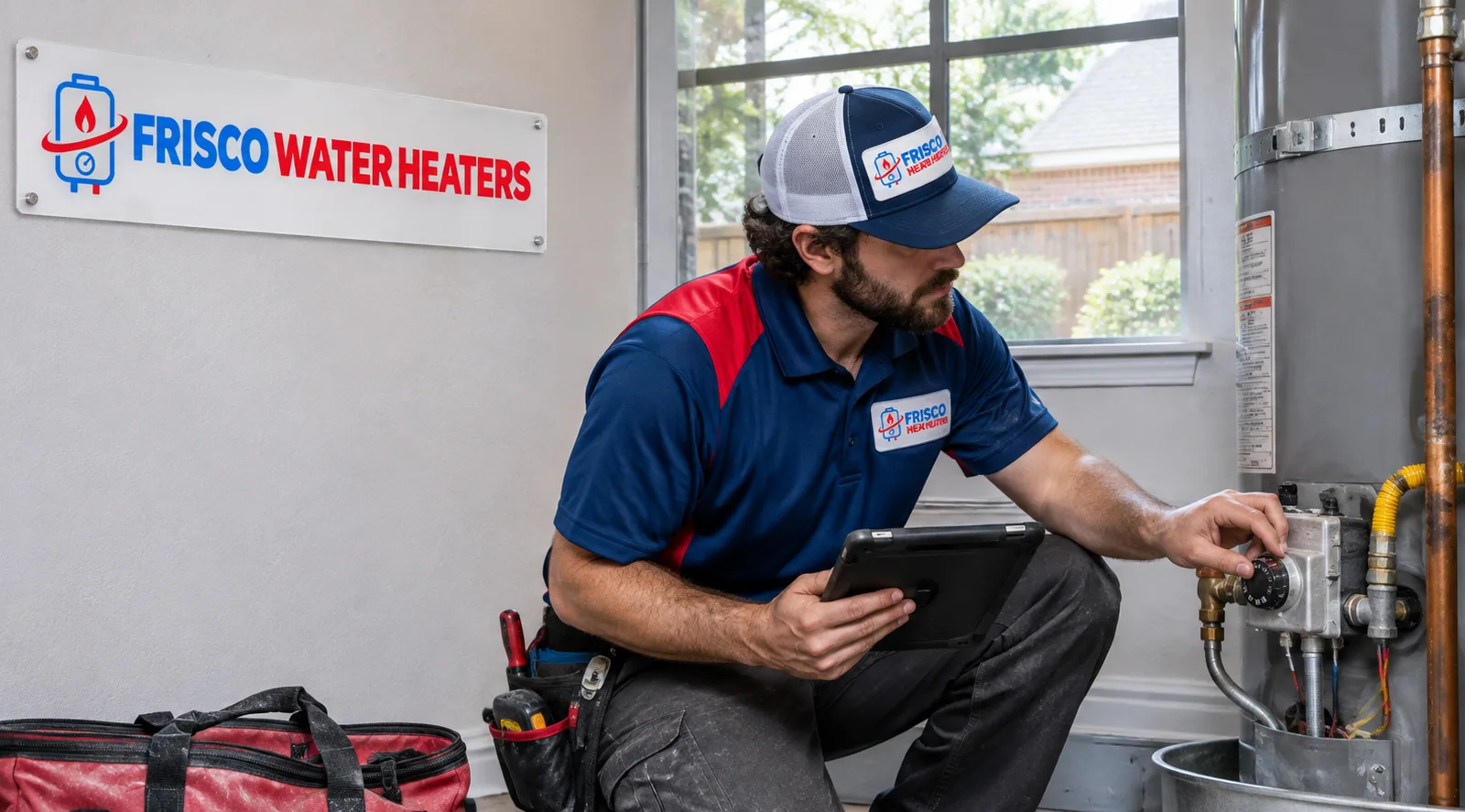
Technician inspecting the controls and connections on a residential tank water heater in a clean Plano utility room
Plano repair service

Dependable Water Heater Repair in Plano

A cold shower, leaking tank, or water heater that shuts down unexpectedly can disrupt the whole household. Frisco Water Heaters provides water heater repair Plano homeowners can turn to for a direct diagnosis and a practical explanation of their options. We troubleshoot the equipment before recommending work, because similar symptoms can have very different causes.

When serving nearby Plano homes, an experienced water heater team in Frisco inspects the water heater itself, along with the connections and operating conditions that affect it. That may include the thermostat, heating elements, gas burner assembly, ignition system, thermocouple or flame sensor, temperature and pressure relief valve, drain valve, venting, and visible supply connections. The findings determine whether a focused repair is reasonable or whether the condition and age of the unit make replacement worth discussing.

Plano includes established communities such as Willow Bend and newer residential areas around Legacy West. Equipment location and access can differ greatly among these homes. A unit in an open garage is usually easier to inspect than one in a tight interior closet or attic platform. Access affects labor, safety planning, and how quickly failed components can be reached.

Common symptoms

Problems Our Plano Water Heater Service Addresses

No Hot Water

Electric units may have a failed heating element, thermostat, wiring connection, or tripped circuit. Gas models may have an ignition, burner, gas-control, or flame-sensing problem. Testing identifies the failed part before repairs begin.

Water That Runs Cold Too Soon

A damaged dip tube, failed lower element, thermostat issue, sediment accumulation, or increased household demand can reduce usable hot water. The correct fix depends on the heater type and measured performance.

Leaks and Moisture

Water may come from a connection, drain valve, relief valve, or the tank itself. A leaking fitting may be repairable. A tank leaking through its body usually requires replacement because the sealed vessel cannot be reliably patched.

Unusual Noise

Popping and rumbling can occur when sediment collects near the burner or lower element. Hissing may point to water contacting a hot surface. The sound, tank condition, and source of moisture all help determine the next step.

Temperature Problems

Water that is lukewarm, excessively hot, or inconsistent can indicate thermostat trouble, element failure, control problems, or a mixing issue. Temperature checks help separate heater faults from fixture-specific problems.

Pilot or Ignition Failure

A gas unit that will not light or stay lit needs inspection of the ignition components, flame sensor or thermocouple, burner area, and control. Combustion and venting concerns should be handled by a qualified technician.

Diagnostic testing

Accurate Diagnosis Before Parts Are Replaced

Good water heater service starts with the symptom and follows the evidence. The technician confirms the fuel or power source, checks controls and safety devices, looks for active leakage, and tests components that relate to the complaint. On an electric tank, resistance and continuity testing can identify an open heating element. On a gas model, inspection may include the ignition sequence, flame condition, burner compartment, gas control, and draft path.

The temperature and pressure relief valve is a safety device, not an ordinary shutoff. Water coming from its discharge pipe may result from excessive temperature, excessive pressure, thermal expansion, or a defective valve. Simply capping that pipe is unsafe. The cause needs to be identified, and any correction must preserve the valve's ability to discharge safely.

A reset button that trips repeatedly also deserves investigation. Resetting it may restore heat temporarily, but repeated trips can indicate a failed thermostat, loose electrical connection, or another overheating condition. A complete diagnosis avoids treating a warning sign as the repair.

Request a Callback
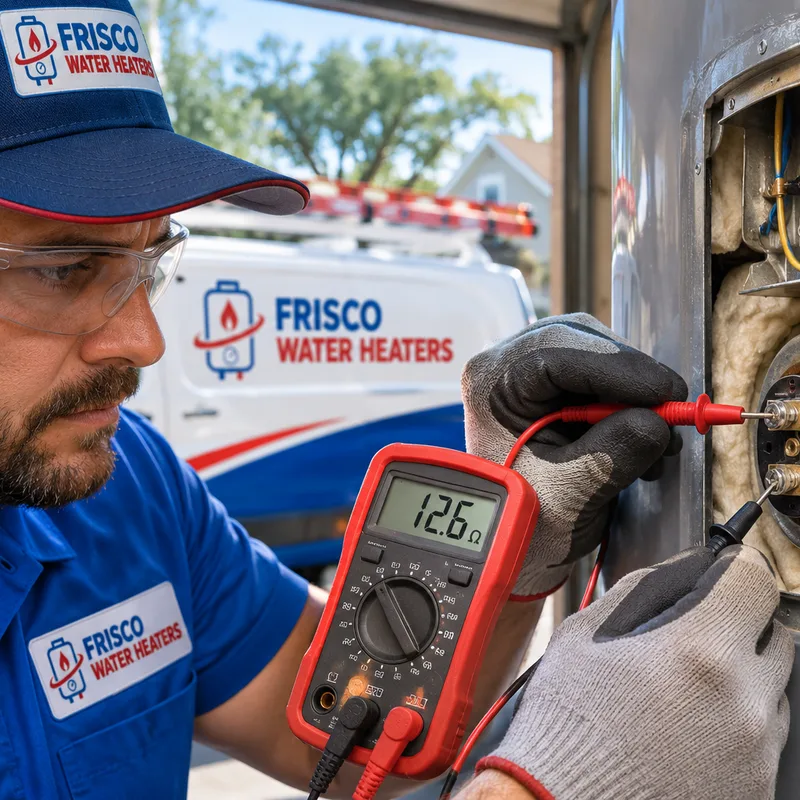
Technician using a multimeter to test an electric water heater element with the access panel safely removed
Component testing helps distinguish a failed part from a broader electrical or control problem.
Repair process

How the Repair Visit Works

  1. Step 1 of 5

    Discuss the Symptoms

    We start with what the household has noticed: no heat, reduced capacity, a leak, noise, an error code, or an intermittent shutdown. The unit's age and any recent changes provide useful context.

  2. Step 2 of 5

    Inspect and Test

    The technician checks the water heater, visible connections, shutoffs, venting where applicable, and the components tied to the complaint. Testing is selected according to whether the unit is gas, electric, tank, or tankless.

  3. Step 3 of 5

    Explain the Findings

    You receive a clear explanation of the fault, the proposed work, and any condition that may affect the repair. If replacement is the more sensible option, that recommendation is separated from the immediate diagnosis.

  4. Step 4 of 5

    Complete the Approved Work

    Approved repairs are completed with the appropriate parts and procedures. The unit is then operated and checked for normal heating, safe function, and visible leakage.

  5. Step 5 of 5

    Review the Result

    Before the visit ends, we explain what was repaired and identify any operating or maintenance point that matters for the unit. You know what changed and what signs should prompt another inspection.

Repair decisions

Repair or Replace the Water Heater?

Repair is often reasonable when the tank is sound and the problem is limited to a serviceable component, such as an element, thermostat, igniter, thermocouple, flame sensor, drain valve, or certain controls. The part must be available, and the rest of the heater should be in suitable condition.

Replacement becomes the stronger choice when the tank body is leaking, corrosion is extensive, repairs are recurring, or the cost of restoring an older unit is high relative to its remaining useful life. A leaking storage tank cannot be made dependable by replacing an external valve if water is escaping through the tank shell. Tankless units require a different assessment because scale, flow sensors, igniters, heat exchangers, and error codes affect the decision.

Frisco Water Heaters explains both paths when both are viable. The recommendation should account for the failure, equipment condition, installation access, fuel type, and expected repair cost. It should not be based on the symptom alone.

Request a Callback
Repair pricing

How Much Does Water Heater Repair Cost in Plano?

Water heater repair in Plano typically costs about $175 to $700, while complex control, gas-valve, or tankless repairs may exceed that range. A basic thermostat, element, ignition component, or valve repair generally costs less than work involving difficult access or multiple failed parts.

Final price depends on heater type, the failed component, parts availability, diagnostic time, access, and whether corrosion or leakage changes the scope. The exact cost is confirmed after the unit is inspected and the repair options are identified.

Service technician inspecting a residential water heater installed in a Plano garage with supply lines, venting, drain pan, and relief discharge visible
Installation access and surrounding components are part of a complete water heater inspection.
Plano service conditions

Local Conditions That Affect Water Heater Performance

Mineral content in North Texas water can leave scale or sediment inside water-heating equipment over time. In a storage tank, deposits can settle near the burner surface or lower electric element, contributing to noise and slower heat transfer. In a tankless heater, mineral scale can restrict passages and reduce performance. The appropriate response depends on the equipment, its condition, and manufacturer instructions.

Plano's housing also presents varied installation conditions. Established neighborhoods such as Old Shepard Place may have different utility layouts and equipment clearances than newer homes near Legacy West. Attic installations require careful attention to safe access and leak risk. Interior closets make combustion air and venting important on atmospheric gas units. Garage installations need protection from impact and proper routing of discharge piping.

Cold weather can increase demand because incoming water is colder and households may use more hot water. If a unit barely meets demand in warmer conditions, reduced recovery or capacity may become more noticeable during a North Texas cold spell. That pattern is useful diagnostic information, even when the heater still produces some hot water.

Request a Callback

A water heater problem rarely improves on its own. Arrange an inspection to identify the cause, understand the repair options, and restore dependable hot water.

Call for a Free Quote
Common questions

Water Heater Repair Plano FAQs

How quickly can a water heater repair in Plano be completed?

Many common repairs can be completed during one visit when the correct part is available. Diagnosis comes first, and completion time depends on the heater type, component availability, installation access, and whether leakage or corrosion reveals a larger problem. Attic or tight closet installations may require additional setup for safe access.

Can a leaking water heater be repaired?

A leaking connection, drain valve, or temperature and pressure relief valve may be repairable, but a tank leaking through its body generally requires replacement. The first step is locating the exact source. Do not cap a relief-valve discharge pipe or continue operating equipment if water is reaching electrical components.

Why does my water heater make popping or rumbling sounds?

Popping or rumbling often indicates sediment or mineral deposits near the tank's heating surface. North Texas water can leave mineral accumulation over time, although noise can have other causes. Inspection helps determine whether flushing is appropriate, whether a component has been damaged, or whether the tank's condition limits the value of further service.

Should I reset my electric water heater if it stops heating?

A single reset may restore operation, but a reset button that trips again needs professional testing. Repeated tripping can signal overheating, a failed thermostat, a loose electrical connection, or another fault. Keep the access covers in place unless the power is off and the work is being performed safely.

Do you service both gas and electric water heaters?

Yes, the diagnostic approach can cover common gas and electric storage heaters as well as tankless equipment. Gas units require attention to ignition, combustion, controls, and venting. Electric units are tested for power, thermostats, heating elements, wiring, and high-limit operation.

Is it worth repairing an older water heater?

Repair can be worthwhile when the tank is sound, the failure is limited, and the expected cost is reasonable. Replacement is usually the safer financial choice when the tank shell leaks, corrosion is widespread, or failures keep recurring. The decision should be based on inspection findings rather than age alone.

What information helps before a Plano water heater service visit?

Share the heater type, visible brand and model if accessible, approximate age, installation location, and the exact symptom. Note whether the problem is constant or intermittent and whether any breaker, error code, pilot light, noise, or leak is involved. Do not enter an unsafe attic or remove energized electrical covers to collect this information.

Get Your Hot Water Working Again

Tell Frisco Water Heaters what the unit is doing and where it is installed. We will help arrange a professional diagnosis and a clear repair plan for your Plano home.