
Equipment and Capacity Review
The assessment considers fuel type, storage capacity or flow rate, first-hour rating, recovery needs, physical clearance, and the household's likely peak demand.
Serving Frisco, Texas & surrounding areas
Open 24/7
Get the right tank or tankless unit for your household, installed with careful attention to capacity, venting, connections, drainage, and code requirements.
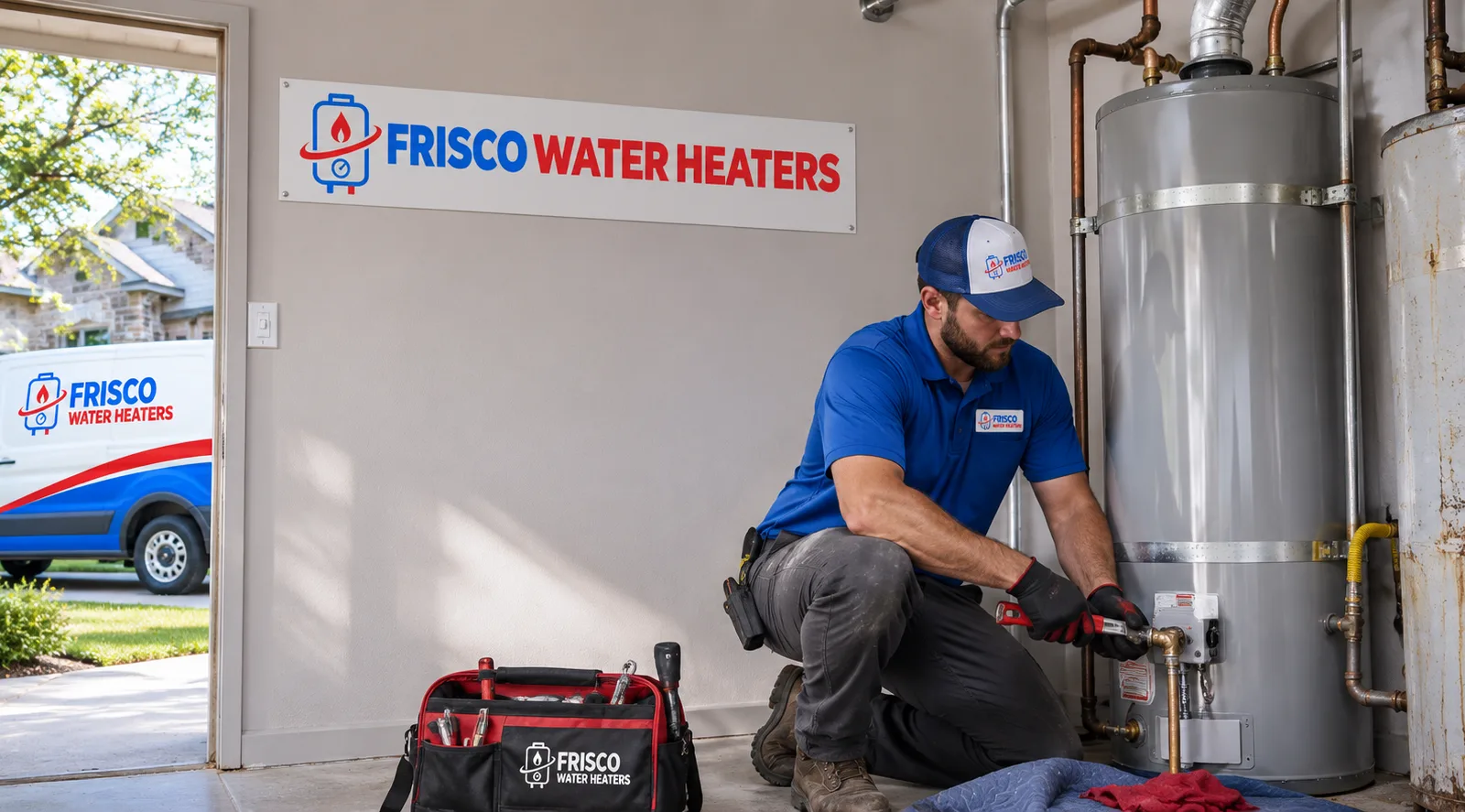
Water heater replacement McKinney service should solve the immediate problem without creating new concerns about capacity, venting, or installation quality. Frisco Water Heaters evaluates the existing unit, household demand, fuel type, available space, and connections before recommending equipment. That preparation helps avoid an undersized tank, an incompatible vent system, or unnecessary changes to working components.
A replacement may be appropriate when a tank leaks, corrosion has reached the vessel, hot water runs out much sooner than it once did, or repair costs no longer make sense for the unit's condition. Water around the base requires prompt attention because a failed tank can release more water without warning. Shut off the unit's water supply if it is safe to do so, keep clear of wet electrical components, and arrange an assessment.
Working from Frisco, Frisco's water heater specialists handle McKinney installations with a practical process built around accurate sizing and a written scope. Customers receive an explanation of the recommended unit, required installation work, and price before replacement begins.
A conventional storage model keeps a set volume of heated water ready for use. It is often the most direct replacement when the existing tank's location, fuel supply, venting, and connections remain suitable. Capacity should be based on peak household demand rather than tank dimensions alone. First-hour rating is a useful comparison because it estimates how much hot water a storage model can deliver during a busy hour.
A tankless model heats water as it flows through the appliance. It can save floor space and remove standby storage, but conversion is not a simple equipment swap. Gas models may require greater gas input, compatible venting, combustion air, and a condensate drain if the unit is condensing. Electric tankless equipment can require substantial electrical capacity. Flow rate and temperature rise determine whether a model can support simultaneous fixtures.
Frisco Water Heaters compares these requirements with the home's existing systems before recommending water heater installation in McKinney. The better choice is the unit that meets real demand and fits the property without unjustified alterations.
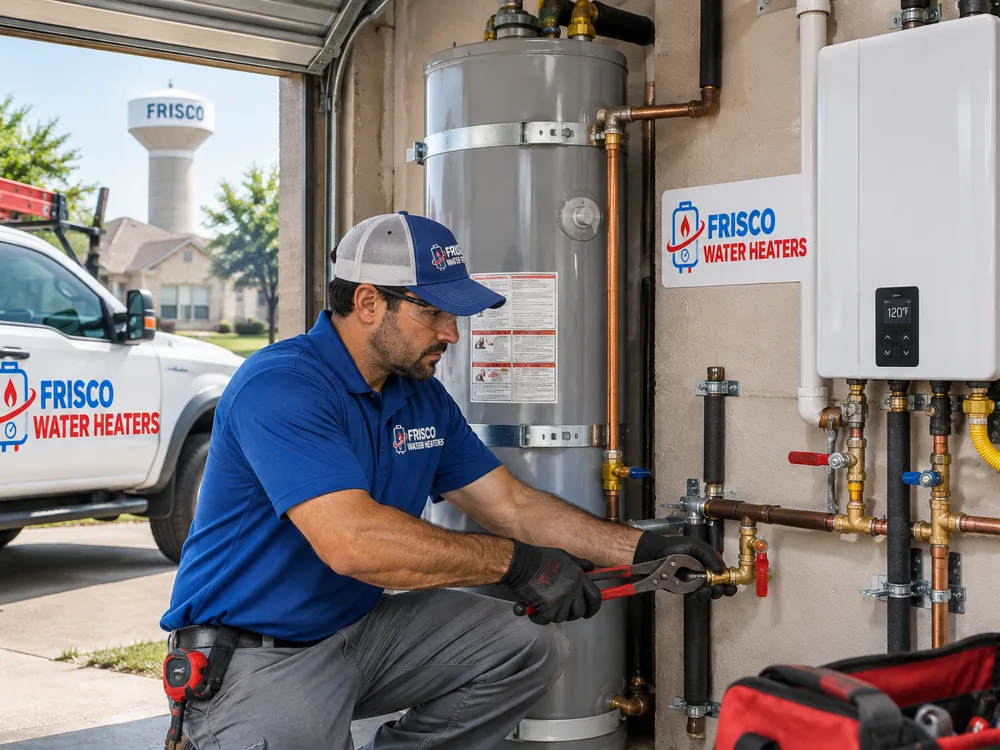
The assessment considers fuel type, storage capacity or flow rate, first-hour rating, recovery needs, physical clearance, and the household's likely peak demand.
The old appliance is disconnected and removed carefully. The replacement is positioned with proper access for operation, inspection, and future maintenance.
Connections are inspected and adapted as required. Gas-fired systems require sound gas piping and shutoffs, while electric models need a compatible circuit and disconnecting means.
Atmospheric, power-vented, direct-vent, and condensing appliances have different requirements. Vent material, route, draft, combustion air, and manufacturer instructions must match the selected model.
The installation may involve a drain pan, discharge routing, expansion control, condensate disposal, and a temperature and pressure relief valve with a suitable discharge pipe.
The completed system is filled, purged, started, and checked for leaks and correct operation. Controls and basic maintenance needs are reviewed with the customer.
Step 1 of 5
We inspect the current appliance, connections, installation area, venting, and signs of leakage or corrosion. Household usage and recurring performance problems are discussed before equipment is selected.
Step 2 of 5
You receive a clear recommendation that identifies the proposed model and any required connection, venting, drainage, or access work. Pricing is explained before installation starts.
Step 3 of 5
Utilities are shut down safely, the tank is drained when applicable, and the old equipment is disconnected and removed from the property.
Step 4 of 5
The new water heater is set, connected, filled, and started according to its listing and manufacturer instructions. We test operation, inspect for leaks, and verify hot-water delivery.
Step 5 of 5
We explain temperature controls, maintenance considerations, and warning signs that merit attention. Equipment and work areas are left orderly after the final checks.
McKinney includes established homes near its historic downtown as well as newer planned communities such as Stonebridge Ranch, Craig Ranch, and Trinity Falls. The installation conditions can differ even when two households need similar amounts of hot water. An older utility closet may impose tight access or require closer review of venting and connections. Newer construction may have a dedicated garage platform, drain provisions, or a recirculation line that must be identified before equipment is chosen.
North Texas summer heat also matters when a water heater is installed in a garage or attic-adjacent mechanical area. Equipment clearances, pipe protection, combustion air, and service access still need attention in hot working conditions. Outdoor tankless units must be listed for exterior installation and protected according to manufacturer requirements, including freeze-protection instructions for cold snaps.
Replacement work should account for local permit and inspection requirements that apply to the property and scope. Frisco Water Heaters checks the installation details rather than assuming the new appliance can be connected exactly like the old one. A model change, fuel conversion, relocated unit, or altered vent route can materially change the work.
Water heater replacement in McKinney typically costs about $1,500 to $3,500 for a standard tank installation, while tankless projects often range from $3,500 to $7,500 or more. These are general local estimates, not a quote. Equipment capacity, fuel type, venting, access, permit needs, code corrections, drain routing, expansion control, and gas or electrical upgrades affect the final price. Converting between tank and tankless usually costs more than replacing like for like. The exact cost is confirmed after the existing installation and proposed equipment are assessed.
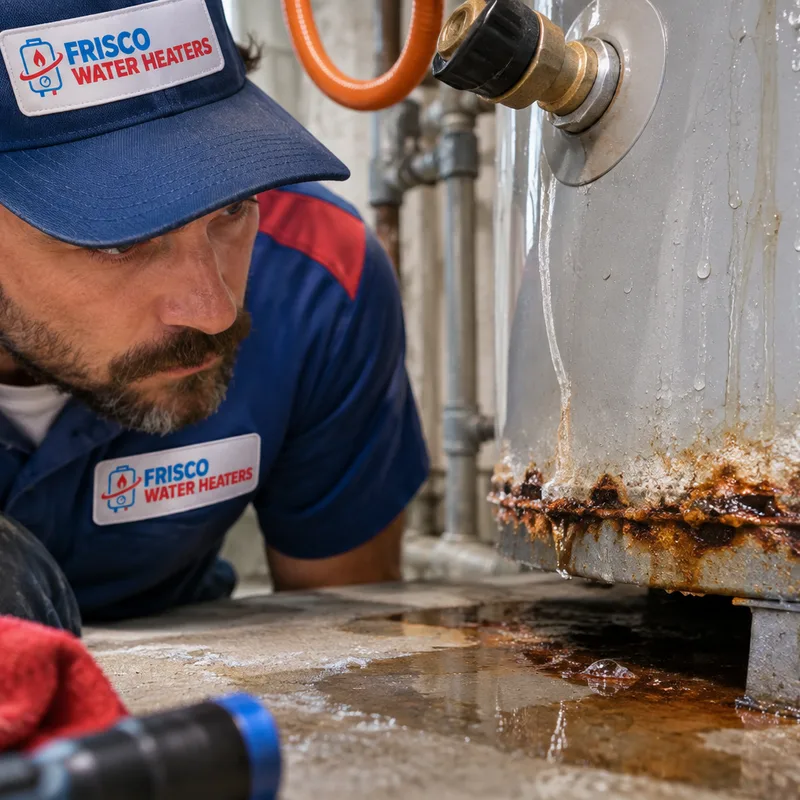
A leaking storage tank generally needs replacement because the sealed vessel is not a serviceable component. Active leakage at a fitting or relief valve may have another cause, so the source should be confirmed before condemning the appliance. Rust-colored water, visible tank corrosion, repeated burner or control failures, and a major decline in hot-water output also justify a thorough assessment.
Age alone does not settle the decision. Condition, repair history, parts availability, installation safety, and the cost of restoring reliable operation matter more than a calendar rule. A relatively new unit may only need a replaceable component, while an older tank with corrosion and repeated problems may be a poor repair candidate.
Unusual popping can result from sediment in a storage tank, but sound by itself does not prove the tank has failed. Likewise, lukewarm water can come from controls, heating elements, burners, dip tubes, mixing valves, or demand that exceeds capacity. Diagnosis distinguishes a repairable fault from a replacement need.
Replace an unreliable unit with equipment sized for your household and a scope that accounts for the connections, venting, drainage, and access before work begins.
Call for a Free QuoteA straightforward like-for-like tank replacement can often be completed in one service visit, subject to equipment availability and the condition of the installation. Tight access, permit requirements, vent corrections, drain work, or utility upgrades can extend the schedule. A tankless conversion usually takes longer because gas, electrical, venting, and condensate requirements must be evaluated.
Permit requirements depend on the property and scope, and the City of McKinney administers building inspections within its jurisdiction. Replacement, relocation, fuel conversion, and changes to gas, electrical, or vent systems may trigger different requirements. The planned work should be checked against current local rules before installation begins.
The same nominal size is appropriate only if it still meets household demand and the replacement model's performance fits the installation. Storage units should be compared by capacity and first-hour rating. Tankless units are selected by required flow rate and temperature rise, while gas input, electrical capacity, venting, and available space also affect suitability.
A tank-to-tankless conversion is possible when the property can support the selected unit's utility and installation requirements. Gas models may need a larger gas supply, new venting, combustion air, and condensate drainage. Electric tankless models can demand significant panel and circuit capacity. An on-site assessment determines whether conversion is practical.
Treat an active leak as urgent and shut off the water supply to the appliance if you can do so safely. Avoid standing water near electrical equipment, and do not operate a gas valve unless you know how to use it. A leak from the tank body usually means replacement, while leakage at a fitting or valve requires diagnosis.
The main cost drivers are equipment type and capacity, access, fuel source, venting, drainage, permit needs, and required corrections to existing connections. McKinney homes with compact closets or older vent arrangements may require more labor than a direct garage replacement. A written quote should identify both the appliance and the installation work.
Removal of the disconnected unit should be confirmed in the written scope before work starts. The route out of the home, stairs, narrow doors, attic access, and the weight of remaining sediment can affect removal. Frisco Water Heaters reviews access during the assessment so handling requirements can be included in the plan.
Tell Frisco Water Heaters what your current unit is doing. We will assess the installation, discuss suitable replacement options, and provide a clear scope for your McKinney home.